 Abilene Septic Installation Pros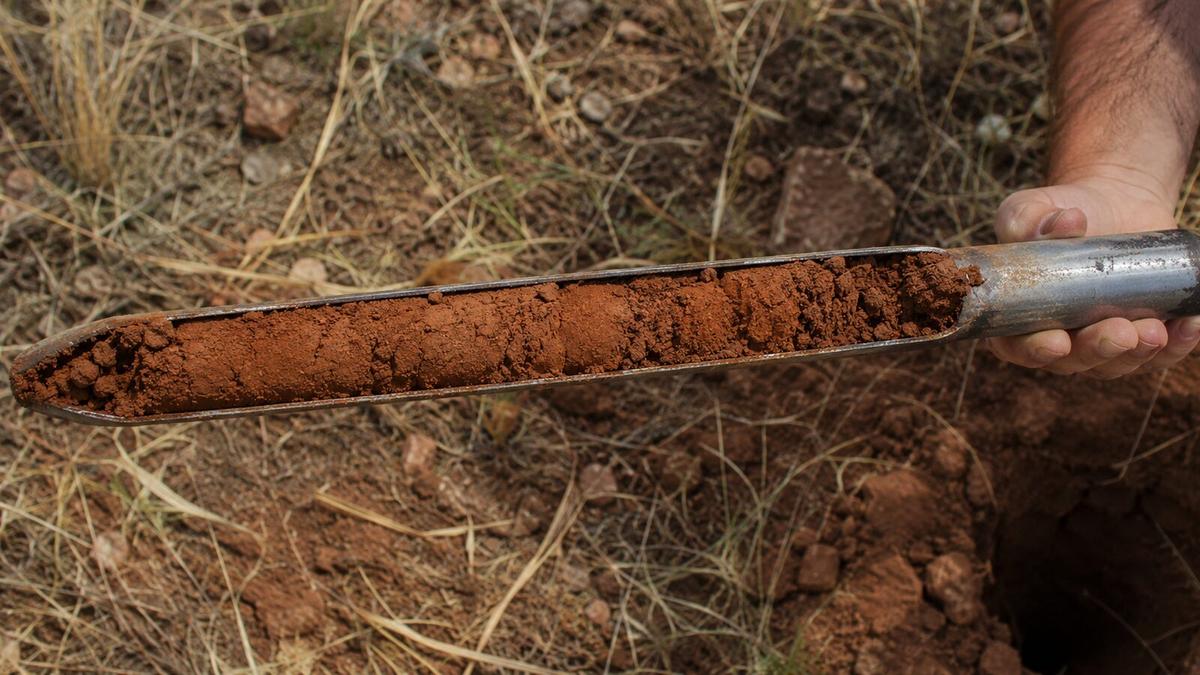
Septic site evaluation & soil testing in Abilene
This is the test that decides everything downstream: whether your lot takes a conventional system or an aerobic one, and what it will cost. Here is exactly what Taylor County checks, and why it comes first.
Call (325) 238-73067am to 7pm, 7 daysTell us about the job, get a number
Send the details and you'll get a real quote back the same day, 7am to 7pm.
Prefer to talk? Call (325) 238-7306
Septic site evaluation and soil testing across Taylor County. Call for a free estimate.
- The step that decides your system type and your cost, done right
- We read the soil to the county standard, two borings, not a guess
- You find out early whether clay pushes you to an aerobic system
- Tell us about your lot and we will tell you what the soil is likely to require
What it is
What does the site evaluation actually decide?
Most local operators mention "we test the soil" in a single line and move on. In Taylor County the site evaluation is the pivot: what is under your yard decides the system type, the drainfield size, and the price, and it is a legal prerequisite, the county will not issue an Authorization to Construct without it.
What the county actually checks
What does the soil evaluation actually measure?
Five things: two soil borings at opposite ends of the absorption area, soil depth (under 24 inches fails the site), gravel content, how fast the ground drains, and where a restrictive layer like rock or dense clay sits. On Taylor County's clay-heavy ground, slow drainage is the most common reason a lot ends up needing an aerobic system.
- Two borings, opposite endsThe evaluation requires at least two soil borings or backhoe pits at opposite ends of the proposed absorption area, each dug to two feet below the planned excavation depth or to a restrictive layer, whichever comes first.Taylor County OSSF Wastewater Systems Checklist
- Soil depth has a floorA site with less than 24 inches of soil beneath the proposed drainfield is deemed unsuitable, so shallow-soil lots often get ruled out for a conventional system on depth alone.Taylor County OSSF permit packet
- Gravel content is measuredSoils with more than 30 percent gravel are unacceptable for a drainfield unless 80 percent of that gravel is smaller than 5 millimeters, one of the specific thresholds the evaluation applies.Taylor County OSSF permit packet
- How fast it drains decides the systemTexas rules require an aerobic system where soil percolation falls outside roughly 5 to 60 minutes per inch. On Taylor County's clay-heavy ground, slow drainage is the common reason a lot lands outside that window.Texas Septic Guide / TCEQ 30 TAC 285; USDA-NRCS regional soil classification, West-Central Texas
- A restrictive layer stops the boringThe boring goes down until it hits a restrictive horizon (rock, dense clay, or the water table's influence), and where that layer sits shapes what kind of system and drainfield the lot can support.Taylor County OSSF Wastewater Systems Checklist
The short version
Why get this done before you design or budget?
The single most expensive mistake on a septic project is committing to a number or a system type before the soil is read. On a clay-heavy Taylor County lot, the honest assumption is that the evaluation may point you to an aerobic system, and only the soil test confirms it either way.
The evaluation feeds straight into the county permit process, so getting it done early keeps the rest of the timeline predictable.
Common questions
Quick answers
-
Why does the soil test come before everything else?
Because it decides what you can build. The soil evaluation determines whether your lot allows a conventional drainfield or requires an aerobic system, and that single answer moves the cost by thousands of dollars. Designing before the soil is read risks a redo, which is why Taylor County requires the evaluation before it will authorize construction.
-
What can make a lot fail the evaluation?
A few things the county checks directly: less than 24 inches of soil beneath the proposed drainfield, soil with more than 30 percent gravel (unless most of it is very fine), or a restrictive layer close to the surface. Clay that drains too slowly does not fail the site, it just points it toward an aerobic system instead of a conventional one.